
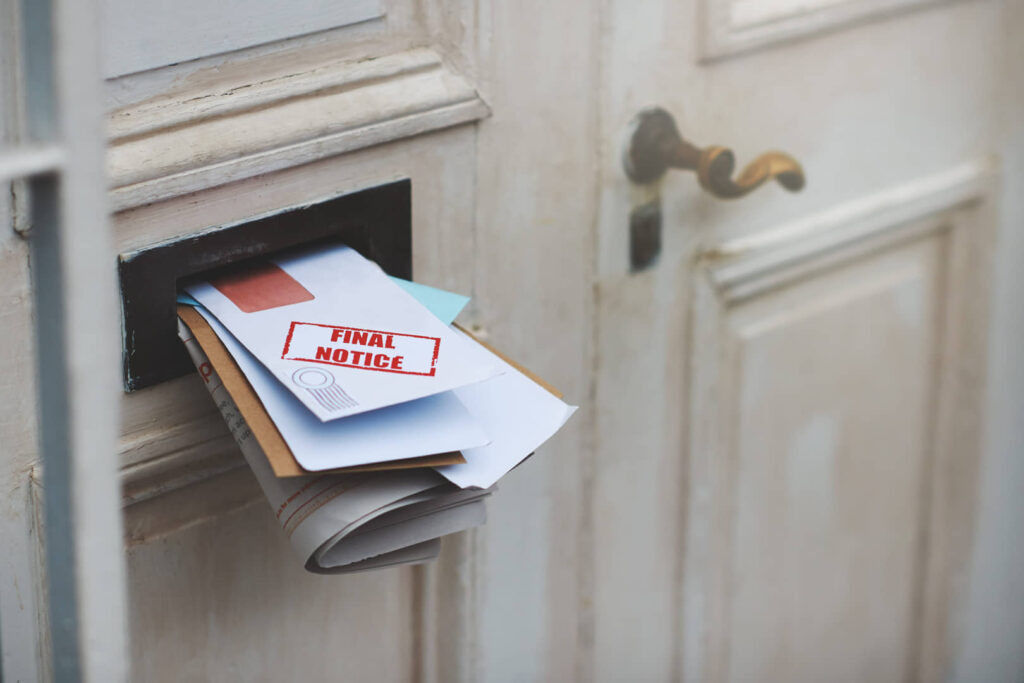
Seeing a red notice on your door — or opening yet another official letter from the township — hits differently than a regular bill. There’s an edge to it. The worry about fines, the confusion about what’s actually required, the feeling that the clock is already running. And if you can’t afford the repairs behind the violation, the anxiety compounds quickly.
Here’s what’s true: code violations are solvable. You have more options than the letter suggests.
Facing code violation anxiety
It’s normal to feel trapped when violation notices start arriving. Maybe you inherited the property and never expected this. Maybe the house has been sitting vacant and the borough kept sending letters while you tried to figure out what to do. When fines and inspection deadlines enter the picture, the stress becomes part of your daily routine.
Most of that anxiety lives in the uncertainty — not knowing how much repairs will cost, how long you have, or whether you have any real choices. The moment you get clear on those three things, the pressure starts to ease.
Understanding local regulations
Pocono Township follows the 2018 International Residential Code and 2018 International Building Code to ensure homes meet structural and safety standards (Pocono Township). Permits are required for new construction, additions, decks over 30 inches from ground level, garages above 1,000 square feet, and sheds over 1,000 square feet.
These rules aren’t arbitrary. They exist to keep construction sound and protect the surrounding community. When the Building Code Official identifies an issue, you’ll typically receive a notice with a defined window to address it — through repairs, a formal plan review, or in some cases, an appeal to the local Zoning Hearing Board.
Knowing where the process comes from makes it less intimidating. This is a standard procedure that Pocono homeowners navigate regularly. You’re not being singled out.
Options for tackling violations
When it comes to resolving code violations, there are three realistic paths. Which one fits depends on your budget, timeline, and long-term plans for the property.
1. Fix the violations. If you want to stay in the home and have access to repair funds, bringing the property into compliance is straightforward — hire a licensed contractor, get the work inspected, and confirm it meets the Uniform Construction Code (Pocono Township). If costs are the sticking point, see overwhelmed by home repairs poconos for financing options that may help.
2. Sell as-is. You don’t have to fix violations before selling. Cash buyers and real estate investors purchase properties with open code issues regularly — it’s part of their model. Selling pocono home as is means you exit without spending money you don’t have, and without managing a renovation timeline under pressure. If you can’t afford the repairs, this is worth taking seriously.
3. A partial fix to improve marketability. Sometimes targeted repairs — addressing the most serious violations without a full renovation — can raise a property’s value enough to cover remaining mortgage or tax balances. If you’re behind on property taxes or the house has been sitting vacant, a limited-scope fix can make the property sellable through traditional channels at a price that actually works.
Code violations don’t make a property unsellable. They change the pool of buyers and the price conversation — but they don’t close the door.
Deciding what works for you
Four questions to get clear on before you commit to a path:
Moving forward
You don’t have to solve every violation today. Pick one step: call a contractor for an estimate, or reach out to a cash buyer to see what your property is worth as-is.
That one step breaks the paralysis.
If you’ve inherited a property with these issues, inherited pocono house dont want covers the specific options available to heirs. If the borough keeps sending letters, that resource covers how to respond and what the escalation timeline typically looks like.
Code violations happen. They don’t have to define what comes next.